
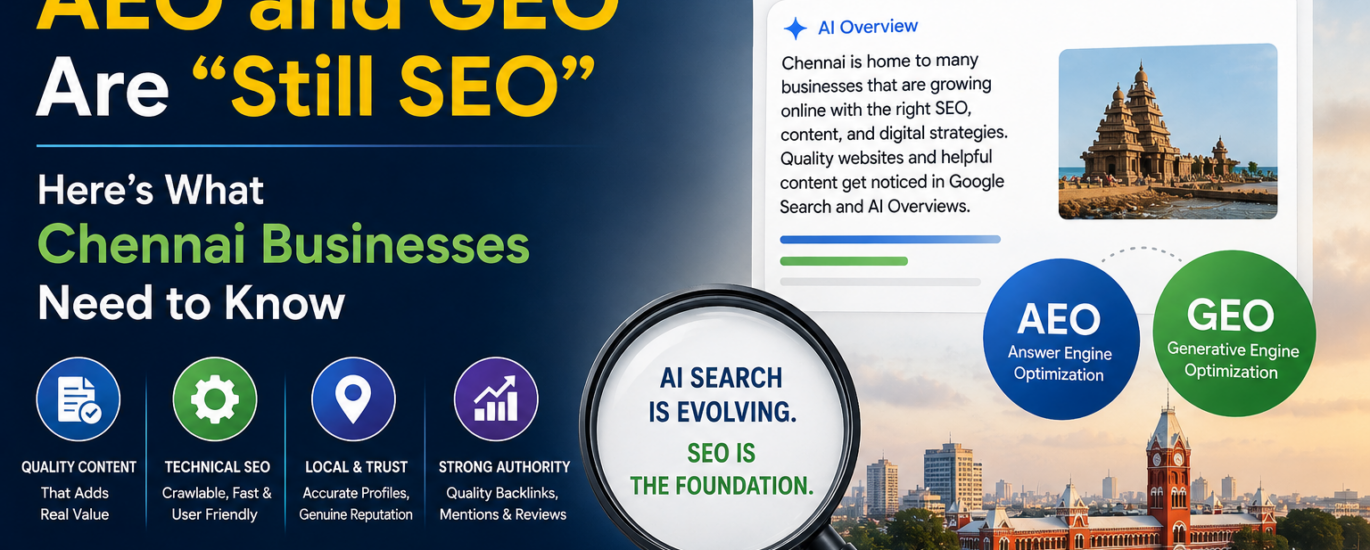
If you’ve spent any time on marketing LinkedIn in the last year, you’ve probably seen the alphabet soup: SEO, AEO, GEO. Answer Engine Optimization. Generative Engine Optimization.
An entire cottage industry has sprung up promising to help brands “rank” inside ChatGPT answers and Google’s AI Overviews, often with tactics that sound suspiciously like reinventing the wheel with a new name.
Google just weighed in officially, in its own documentation and the message is refreshingly simple: it’s still SEO.
In May 2026, Google published a new guide titled “Optimizing your website for generative AI features on Google Search,” expanding on the AI features documentation it released the previous year.
This isn’t a blog post or a stray comment from a Google employee at a conference. it’s official reference material. And it settles a debate a lot of agencies (including plenty of your competitors) have been having with clients all year.
At Seven Horses, we work with businesses across Chennai and beyond who are understandably anxious about AI search changing the rules. So let’s break down what Google actually said, what it means for your website, and where to actually spend your time and budget.
AEO and GEO Aren’t New Disciplines – They’re SEO Wearing a New Hat
Google’s guide draws a clear line: AI Overviews and AI Mode are built on the same core Search ranking and quality systems that have always powered Google Search. They lean on retrieval-augmented generation (RAG) and a technique called query fan-out to pull relevant content from Google’s existing search index, the same index your website is already trying to rank in.
Put plainly, Google’s own position is that optimizing for its generative AI search experience is simply optimizing for search full stop. This isn’t a huge surprise if you’ve followed Google’s public comments over the past year; Google representatives have said much the same thing on stage at industry events. But having it published as official documentation gives businesses (and their marketing partners) something concrete to point to.
What this means for you: if your website has strong technical foundations, genuinely useful content, and a healthy backlink and reputation profile, you’re already doing the work that helps you show up in AI Overviews and AI Mode. You don’t need a parallel “AI strategy” bolted on top of your SEO strategy you need good SEO, applied consistently.
The Tactics Google Says You Can Skip
This is the part of the guide that’s making waves in the SEO community, because Google directly calls out several tactics that AEO/GEO consultants have been selling as must haves.
1. You don’t need an llms.txt file. There’s no special machine-readable file, AI specific markup, or Markdown version of your site required to appear in Google’s AI search features. Google already crawls and indexes a wide range of file types creating a separate file just for AI systems doesn’t earn you special treatment.
2. You don’t need to “chunk” your content. A popular GEO tactic involves breaking pages into small, isolated, single topic fragments so AI models can supposedly parse them more easily. Google says its systems are already capable of understanding multiple topics within a single page and surfacing the relevant section to the user. Chopping up naturally structured content for the sake of an algorithm isn’t necessary and can hurt the reading experience for actual humans.
3. You don’t need to rewrite content specifically for AI. Worried you need to spell out every long tail keyword variation or phrase things in a stilted, robotic way for AI to “understand” your content? You don’t. Google’s systems can interpret synonyms and general meaning without you contorting your copy.
4. Chasing inauthentic mentions isn’t worth it. Yes, AI features can pull in what’s being said about your brand across blogs, forums, and video. But manufacturing fake buzz or planting mentions isn’t the shortcut some vendors claim, because Google’s quality systems are designed to filter out spam and reward genuine authority.
5. You don’t need special schema markup for AI search. Structured data remains valuable for earning rich results in traditional search but there’s no separate schema.org markup required specifically to appear in AI Overviews or AI Mode.
If you’ve been pitched any of the above as an urgent, must-do “AI SEO” fix, it’s worth treating that advice with some skepticism.
What Google Actually Recommends You Focus On
Strip away the myths, and Google’s guidance circles back to fundamentals just framed with an AI lens.
- Create non-commodity content. Google draws a distinction between generic content (think “7 Tips for First-Time Homebuyers”) and content that offers a genuinely unique angle or insight readers can’t get anywhere else. Original expertise, data, and first-hand experience matter more than ever.
- Get the technical basics right. Your pages need to be crawlable, indexable, and eligible to appear as snippets. That means clean semantic HTML, solid JavaScript SEO practices, good page experience, and minimal duplicate content the same checklist a good technical SEO audit has always covered.
- Local and ecommerce businesses have specific levers. Google recommends keeping Merchant Center feeds and Google Business Profiles accurate and current, since these directly feed product and local business visibility inside AI-powered responses.
For most small and mid-sized businesses in Chennai and across India, this is genuinely good news: it means your SEO budget doesn’t need to be split into a “traditional SEO” bucket and a separate, expensive “AI optimization” bucket. It needs to go toward the same things that have always mattered quality content, technical health, and authority.
A New Frontier: Agentic Experiences
One genuinely new addition in Google’s guide covers AI agents autonomous tools that can complete tasks on a user’s behalf, like booking a table or comparing product specs across sites. Google notes that browser based agents may read your website differently than a human does: by analyzing screenshots, inspecting the DOM, and interpreting the accessibility tree rather than just reading rendered text.
Google also points to the emerging Universal Commerce Protocol (UCP), a standard co-developed with Shopify and backed by more than 20 companies, designed to let search agents interact more directly with commerce sites.
Google is careful to frame this as forward-looking, not urgent something to explore “if this is relevant to your business and you have extra time,” rather than a checklist item for this quarter. For ecommerce brands planning ahead, it’s worth keeping on the radar; for most local service businesses, it’s not a priority yet.
Our Take: Don’t Chase Shiny Objects, Build a Strong Foundation
Google’s own closing note in the guide is worth repeating in spirit: you don’t need to do everything on this list to succeed. Plenty of content ranks well in Google Search AI features included without any overt, aggressive optimization at all.
That’s consistent with how we approach SEO at Seven Horses. We’ve never believed in gimmicks or “hack the algorithm” tactics, because they tend to have short shelf lives and can actively work against you once search engines catch up. What consistently works, AI era or not, is:
- Content built on real expertise and unique insight, not recycled listicles
- Clean, fast, well-structured websites that both users and crawlers can navigate easily
- Consistent technical SEO hygiene – indexing, crawlability, structured data for rich results
- A genuine reputation built through quality mentions, reviews, and backlinks not manufactured ones
- Up-to-date local listings and Business Profiles for businesses that depend on local discovery
If you’re a business owner wondering whether you need to overhaul your website for “the AI search era,” the honest answer straight from Google itself is that you probably need to double down on the SEO fundamentals you may have been neglecting, not chase a new discipline entirely.
Ready to Build an SEO Strategy That Works With – Not Against – AI Search?
At Seven Horses Software Solutions, we help businesses across Chennai build digital marketing strategies rooted in what actually moves the needle: solid technical SEO, content that reflects real expertise, and a brand presence that earns trust with both search engines and AI systems. No chasing fads, no unnecessary llms.txt files, just strategy that lasts.
Get in touch with our team to audit your website’s AI and search readiness, and let’s build a strategy that keeps you visible wherever your customers are searching traditional results or AI powered answers.