
In today’s fast-moving online world, businesses can no longer rely on a single marketing channel to connect with customers. Consumers interact with brands through multiple touchpoints from social media and search engines to emails and mobile apps. That’s where multi-channel digital marketing strategies come in. By combining multiple online channels into a unified marketing approach, brands can maximize visibility, boost engagement, and achieve greater reach.
Whether you’re a startup or an established brand, adopting a multi-channel approach can transform your digital presence. Let’s explore how to implement it effectively.
What Is Multi-Channel Digital Marketing?
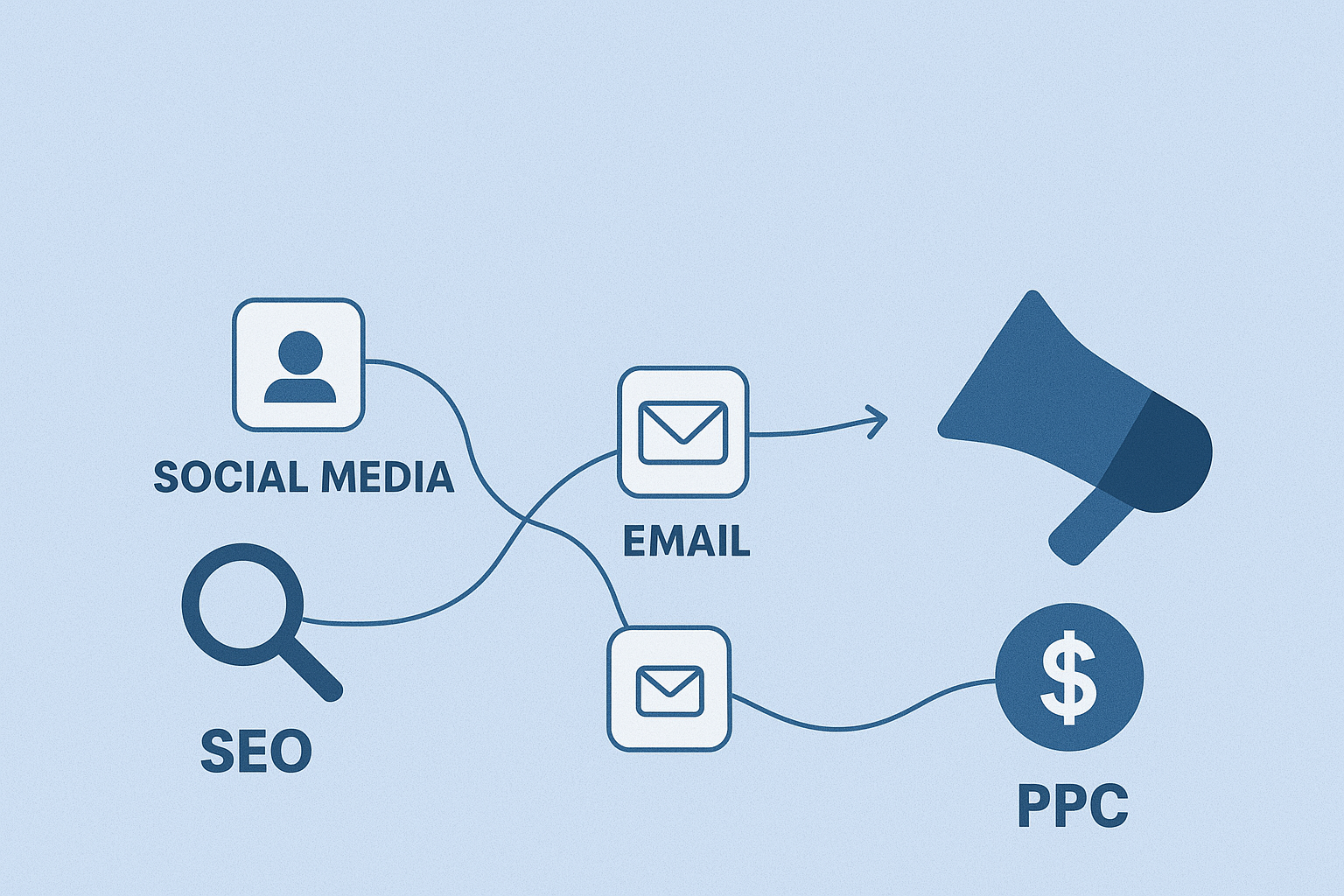
Multi-channel digital marketing is the practice of promoting your brand through various online platforms such as Google, social media, email, websites, and paid ads to reach your audience wherever they are. The key goal is to deliver consistent messaging across all channels while leveraging the unique strengths of each platform.
For example:
Use SEO and Google Ads to capture search intent.
Use social media to engage and build brand awareness.
Use email marketing to nurture leads.
Use content marketing to educate and build trust.
Benefits of Multi-Channel Digital Marketing
Broader Audience Reach:
By being visible on multiple platforms, your brand can reach users at different stages of their buying journey.Improved Customer Engagement:
Different customers prefer different channels some may respond to email campaigns, while others engage more through Instagram or YouTube.Higher Conversion Rates:
Consistent exposure across various platforms increases trust and drives more qualified leads to convert.Enhanced Brand Recognition:
A unified presence across multiple platforms helps establish a strong, recognizable brand identity.
Steps to Implement a Multi-Channel Digital Marketing Strategy
1. Understand Your Audience
Start by researching your target audience their demographics, online behavior, and preferred platforms. Use tools like Google Analytics, Meta Insights, or Ahrefs to identify where your audience spends most of their time online.
2. Define Your Goals
Are you looking to boost brand awareness, drive traffic, or increase conversions? Clearly define your goals for each channel so you can tailor strategies accordingly.
3. Choose the Right Channels
Not every platform suits every business. Focus on the ones that best align with your brand and audience:
Google SEO and Ads for search visibility
Facebook & Instagram for engagement and brand stories
LinkedIn for B2B connections
YouTube for educational and visual content
Email marketing for nurturing relationships
4. Develop Channel-Specific Strategies
Each channel has unique strengths:
SEO (Search Engine Optimization): Optimize your website for search engines with the right keywords, backlinks, and mobile-friendly content.
Social Media Marketing: Share engaging visuals, reels, and posts consistently to build community trust.
Pay-Per-Click (PPC) Advertising: Run targeted Google Ads or Meta Ads to reach users who are actively searching for your services.
Email Campaigns: Send personalized emails, newsletters, and offers to maintain long-term relationships.
Content Marketing: Create valuable blogs, infographics, and videos that educate and attract potential clients.
5. Maintain Consistent Branding
Ensure that your brand’s tone, visuals, and messaging remain consistent across all platforms. This consistency builds credibility and trust.
6. Integrate Your Channels
Make sure all your channels work together. For example:
Promote your website through social media posts.
Use email newsletters to share blog links.
Retarget website visitors with Google or Facebook Ads.
7. Track and Measure Performance
Use analytics tools like Google Analytics, Facebook Insights, and HubSpot to track engagement, leads, and conversions. Regularly evaluate your campaigns to identify which channels deliver the best ROI.
Pro Tips for Multi-Channel Success
Automate your marketing with tools like Mailchimp, HubSpot, or Buffer.
Retarget your audience to re-engage those who have shown interest.
A/B test your campaigns to find what works best for each platform.
Keep up with trends — digital platforms evolve quickly, so stay updated with the latest strategies.
Implementing a multi-channel digital marketing strategy helps your business stay visible, relevant, and connected to potential customers across multiple online platforms. Whether through Google SEO, PPC ads, social media marketing, or email campaigns, integrating these channels ensures a stronger brand presence and sustainable growth.