
Search Engine Optimization (SEO) has evolved significantly over the past decade. Earlier, ranking a website was mostly about inserting the right keywords in content and building backlinks. However, modern search engines have become far more intelligent. Today, they focus on understanding context, meaning, and relationships between topics rather than simply matching keywords.
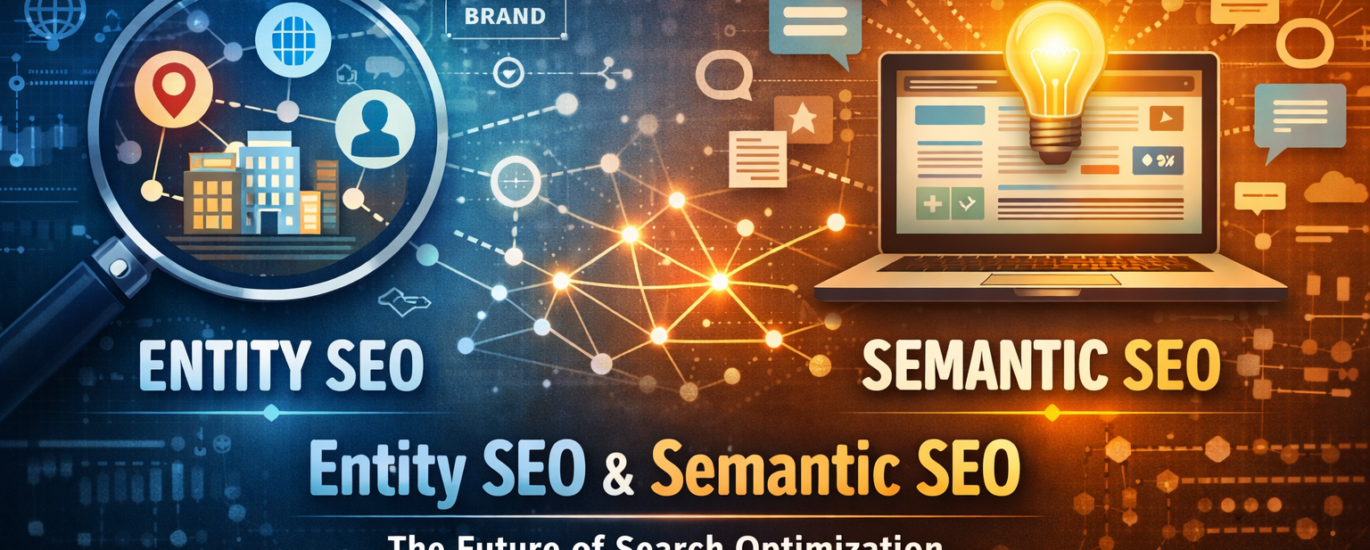
Two important concepts shaping the future of SEO are Entity SEO and Semantic SEO. These strategies help search engines better understand your content and provide more relevant results to users. Search engines like Google are continuously improving their algorithms to interpret user intent and deliver accurate information.
In this article, we will explore what Entity SEO and Semantic SEO are, how they work, and how they influence modern SEO strategies.
Understanding Entity SEO
Entity SEO focuses on optimizing identifiable objects or concepts known as entities. In simple terms, an entity can be anything that search engines can clearly recognize and understand.
Examples of entities include:
- A person (e.g., a business owner or public figure)
- A company or brand
- A location or city
- A product or service
- An event or organization
Search engines organize these entities within a knowledge system called the Knowledge Graph. This system connects entities and their relationships, allowing search engines to provide better answers.
For example, if someone searches for a digital marketing agency, the search engine does not only look for pages containing those keywords. Instead, it identifies relevant entities such as agencies, locations, services, and industry expertise.
Entity SEO helps search engines understand:
- Who your business is
- What services you provide
- Where your business operates
- How your business relates to other entities
When your website clearly defines these elements, search engines can easily connect your brand to relevant searches.
What is Semantic SEO?
Semantic SEO focuses on improving the meaning and context of your content rather than focusing only on keywords.
Traditional SEO strategies often relied on repeating the same keyword multiple times within content. However, modern algorithms now analyze the overall topic and the relationships between words.
Semantic SEO ensures that content answers user questions naturally and thoroughly. It involves:
- Using related keywords and phrases
- Creating topic clusters around a main subject
- Writing content that matches search intent
- Structuring information clearly with headings and subtopics
For example, if a blog post is about digital marketing strategies, semantic SEO would include related concepts such as content marketing, social media marketing, and search engine optimization. This helps search engines understand the broader topic and rank the content for multiple related searches.
The Role of Search Algorithms in Semantic SEO
Modern search engines rely on advanced artificial intelligence technologies to understand language and user queries. One such example is Google BERT, which helps search engines interpret natural language and the context of words within a sentence.
This technology allows search engines to understand complex queries such as:
- Conversational searches
- Voice search questions
- Long-tail keyword phrases
Because of these advancements, content that provides clear explanations and useful information tends to rank higher than content that simply repeats keywords.
Differences Between Entity SEO and Semantic SEO
Although Entity SEO and Semantic SEO work together, they focus on different aspects of search optimization.
Entity SEO focuses on:
- Recognizing specific objects or concepts
- Establishing relationships between entities
- Improving brand recognition in search results
Semantic SEO focuses on:
- Content meaning and context
- Search intent and user questions
- Topic relationships within content
When both strategies are combined, search engines can understand both the topic of the content and the entities involved, which improves overall search visibility.
Why Entity SEO is Important for Modern Websites
Entity SEO plays a crucial role in helping search engines understand your brand and its authority within a specific topic.
Benefits of Entity SEO include:
Improved Search Visibility
When search engines clearly recognize your business as an entity, they are more likely to display it in rich results, knowledge panels, and featured snippets.
Stronger Brand Recognition
Entity SEO helps search engines connect your brand name with specific services and topics, increasing brand authority.
Better Local SEO Performance
For businesses that operate in specific locations, entity optimization helps search engines understand where your services are offered.
The Importance of Semantic SEO for Content Marketing
Semantic SEO improves the quality and depth of website content. Instead of creating multiple pages targeting similar keywords, businesses can create comprehensive content that covers an entire topic.
Key benefits include:
Better User Experience
Content written using semantic SEO provides clear and detailed information, making it more valuable for readers.
Higher Keyword Coverage
Semantic content can rank for multiple related keywords instead of just one primary keyword.
Improved Engagement
When content answers user questions effectively, visitors stay longer on the website, which signals quality to search engines.
How Entity SEO and Semantic SEO Work Together
The real power of modern SEO comes from combining entity-based optimization with semantic content strategies.
For example:
- Entity SEO helps search engines understand who your business is and what it represents.
- Semantic SEO helps search engines understand what your content means and how it answers user queries.
When these strategies work together, search engines can accurately interpret the topic, relevance, and authority of a webpage.
Practical Strategies to Implement Entity and Semantic SEO
Businesses can implement these strategies using several practical methods.
Create Topic-Focused Content
Instead of writing short posts targeting individual keywords, create detailed articles that cover an entire topic.
Use Structured Data
Schema markup helps search engines identify entities such as businesses, products, reviews, and events.
Build Topic Clusters
Organize related articles around a central pillar page to establish topical authority.
Optimize for Search Intent
Understand what users are actually looking for when they search and provide clear answers.
Maintain Consistent Brand Information
Ensure your brand name, location, and services are consistent across your website and online profiles.
The Future of SEO
As search engines continue to evolve, the focus of SEO is shifting from keyword-based optimization to context-based understanding. Technologies such as artificial intelligence and natural language processing allow search engines to analyze relationships between topics and entities more effectively.
Businesses that adapt to these changes by focusing on content quality, entity optimization, and semantic structure will have a stronger chance of achieving long-term search visibility.
Entity SEO and Semantic SEO represent the future of search optimization. While Entity SEO helps search engines understand identifiable concepts like brands, locations, and services, Semantic SEO focuses on the meaning and context of content.
By combining these two strategies, businesses can create content that is both search engine friendly and highly valuable to users. As search algorithms continue to become more advanced, adopting these modern SEO techniques will be essential for achieving sustainable online growth.