
Most businesses in Chennai know they need “digital marketing” but few have an actual strategy a connected plan across SEO, ads, social media, and content that works together instead of running as disconnected, one off activities. The difference shows up directly in results: businesses with a coordinated strategy consistently get more leads for the same budget than those running SEO in one corner and Instagram ads in another with no shared goal.
Whether you’re a clinic in Adyar, a manufacturing business in Ambattur, or a D2C brand shipping pan India from Chennai, this guide breaks down what a real digital marketing strategy looks like in 2026 and how to build one.
Why a “Strategy” Matters More Than Individual Tactics
It’s common for a business to run Google Ads for a few months, pause them, try Instagram, then hire an SEO freelancer separately with no shared tracking, messaging, or goals across any of it. This approach almost always costs more per lead than it should, because:
- Channels reinforce each other. A customer who sees your brand on Instagram, then finds you again on Google, trusts you more by the time they enquire this only happens when messaging is consistent across channels.
- Data from one channel improves another. Search terms that convert well in Google Ads often reveal exactly what content your SEO strategy should target next.
- Budget is used more efficiently. A shared strategy avoids spending on awareness (social media) and conversion (search ads) in isolation, when they should be sequenced to guide a customer from discovery to purchase.
The Core Pillars of a 2026 Digital Marketing Strategy
1. Search Engine Optimization (SEO)
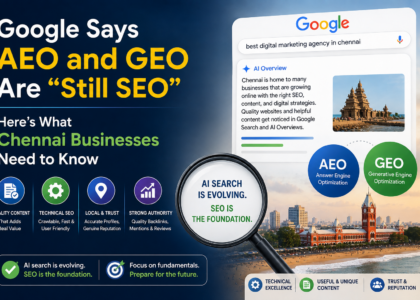
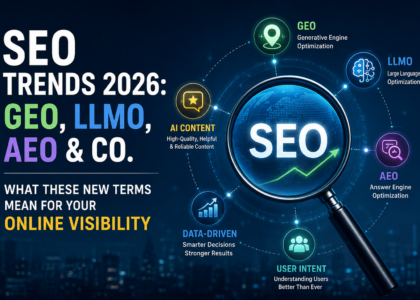
SEO remains the highest-ROI channel over time because it compounds unlike ads, which stop the moment you stop paying. In 2026, this includes optimising not just for traditional Google rankings but also for how AI-powered search and answer engines (Google’s AI Overviews, ChatGPT, Perplexity) surface businesses, which increasingly rewards clear, well-structured, genuinely useful content over keyword-stuffed pages.
2. Search Engine Marketing (SEM / Google Ads)
Paid search is still the fastest way to get in front of customers actively searching for what you offer. The key in 2026 is precision tightly themed campaigns, strong landing pages (not just your homepage), and consistent tracking of which keywords actually convert into enquiries, not just clicks.
3. Social Media Marketing
Social media works best for awareness and trust-building, not direct conversion for most businesses. A consistent posting rhythm, real photos/videos over stock content, and platform-appropriate formats (Reels for Instagram, WhatsApp Status for direct engagement) matter more than posting volume alone.
4. Content Marketing
Blogs, guides, videos, and case studies do double duty: they feed your SEO strategy and give you something genuinely useful to share on social media and WhatsApp. Content built around real customer questions not just company announcements consistently performs best.
5. Website and UI/UX
Every other channel ultimately sends traffic to your website, so a slow, cluttered, or confusing site undoes the value of your ad spend and SEO work. Clear calls to action, mobile first design (most Chennai traffic is mobile), and fast load times are non-negotiable in 2026.
How to Build Your Strategy: A Practical Approach
- Start with one clear goal – more enquiries, more footfall, more online orders – rather than trying to “do everything” at once.
- Audit what’s already working in your existing SEO, ads, and social presence before adding anything new.
- Map the customer journey – where does a Chennai customer first discover you, and what do they need to see before they enquire or buy?
- Set a realistic budget split across channels based on what stage of the journey needs the most support right now.
- Track everything against leads or sales, not just impressions or followers vanity metrics don’t pay bills.
- Review and adjust monthly, not once a year digital channels change fast enough that a static plan goes stale quickly.
Common Mistakes Chennai Businesses Make
- Running ads without a strategy for what happens after someone clicks
- Treating SEO as a one-time project instead of an ongoing effort
- Posting on social media with no connection to what the business is actually trying to achieve
- Ignoring mobile experience despite most local traffic coming from phones
- Not tracking which channel actually drives paying customers, not just enquiries
Final Thoughts
Digital marketing in 2026 isn’t about picking the “best” channel it’s about building a strategy where SEO, ads, content, and social media all point toward the same goal. Businesses that treat these as one connected system, rather than separate experiments, see stronger and more predictable growth.
Not sure where your digital marketing strategy has gaps? Get in touch with our team for a free audit of your current SEO, ads, and social media performance, and a clear roadmap for where to focus next.