
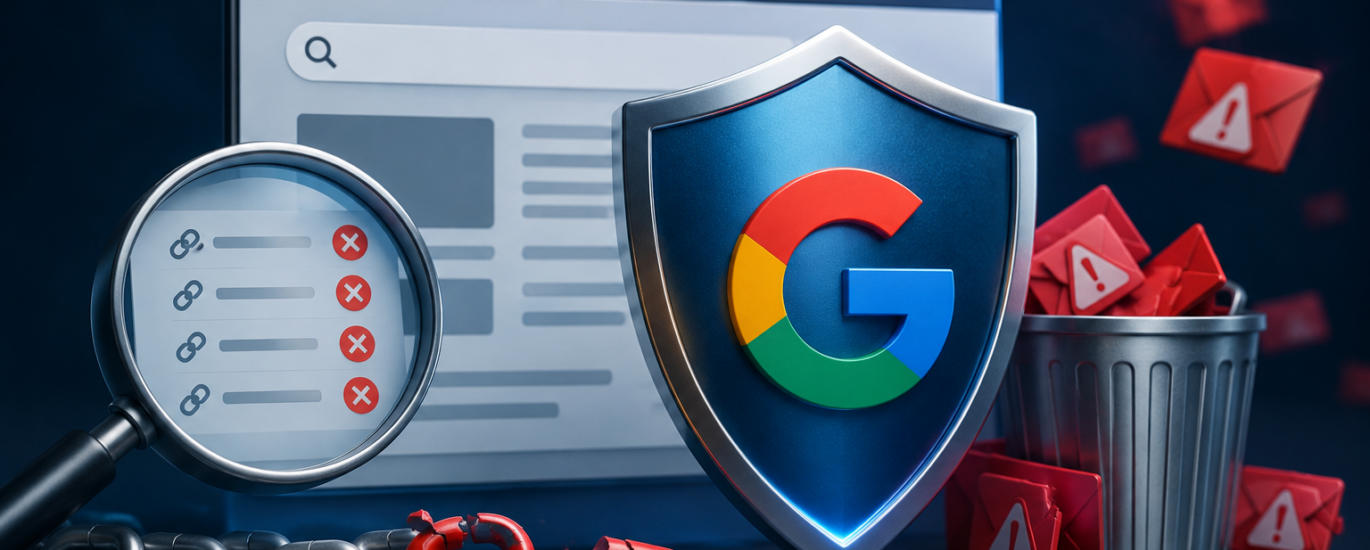
Google has rolled out a new spam fighting algorithm change the August 2026 spam update and if your rankings suddenly shift over the next few days, this could be why. Here’s everything you need to know about the update, what it targets, and how to protect (or recover) your site’s visibility in search.
What Happened
On August 18, 2026, Google confirmed on its Search Status Dashboard that it had released a new spam update. Google described the rollout as global, applying to all languages and regions, and said it would take several days to fully complete meaning some sites may not see the full effect immediately, and rankings could keep moving through the rest of the week.
This marks the third confirmed spam update of 2026, following the March 2026 spam update and the June 2026 spam update earlier in the year. Google has been on a fairly consistent cadence of spam updates in 2026, roughly one every two to three months, as it continues to refine its automated spam-detection systems.
What Is a Google Spam Update, Exactly?
Unlike a core update which broadly reassesses how Google evaluates relevance and quality across the web a spam update is a more targeted change to the systems that specifically detect and demote spammy content and manipulative SEO tactics.
Much of this work is powered by SpamBrain, Google’s AI based spam prevention system, which is periodically retrained and improved to catch new and evolving spam techniques. According to Google’s own documentation, common categories that spam updates target include:
- Cloaking – showing different content to Googlebot than to real users
- Hacked or injected content on compromised sites
- Auto-generated and scraped content with little original value
- Scaled content abuse – mass-producing pages (including AI-generated pages) primarily to manipulate rankings
- Link spam – buying, exchanging, or artificially building links to manipulate rankings
- Doorway pages and expired domain abuse
- Site reputation abuse, where third-party content is hosted on an established site purely to exploit its authority
Google has not published a detailed breakdown of exactly which spam types this particular August 2026 update prioritizes, which is typical the company rarely discloses granular targeting details for routine spam updates.
Why This Matters for Your Website
If you run a legitimate business website and follow Google’s guidelines, a spam update usually isn’t something to lose sleep over. But there are a few reasons this update is still worth paying attention to:
- Collateral impact happens. Even sites that aren’t intentionally spamming can occasionally see ranking fluctuations during a spam update rollout, especially if they have thin content, aggressive affiliate structures, AI-generated pages published at scale, or a backlink profile that includes low-quality or paid links.
- Recovery isn’t instant. If a site is genuinely affected by manipulative tactics, Google has said that improvements may take months to be reflected in rankings, as its systems re-evaluate the site over time. For link-spam-specific updates in particular, simply removing bad links doesn’t always restore lost ranking value immediately.
- It’s a good checkpoint. Any spam update is a natural moment to audit your site against Google’s current spam policies, rather than waiting until you notice a traffic drop.
How to Check If Your Site Was Affected
- Compare your Google Search Console performance data for the days before and after August 18, 2026, looking specifically at clicks, impressions, and average position.
- Segment by page and query a site wide, uniform drop often points to something different than a core update (like a technical issue), while a targeted drop on specific pages or page types is more consistent with a spam-related demotion.
- Check for a manual action notice in Search Console under Security & Manual Actions this is different from an algorithmic spam update and requires a reconsideration request once fixed.
- Give it time. Since Google says the rollout can take several days, wait until it’s fully complete before drawing conclusions from the data.
What to Do If You’ve Been Impacted
If you notice a drop that lines up with this update, review your site honestly against Google’s spam policies, paying close attention to:
- Content quality – is content genuinely useful and written for people, or does it exist mainly to rank for keywords?
- AI-generated content at scale – Google has been explicit that using generative AI tools to mass-produce pages primarily to manipulate rankings violates its scaled content abuse policy, even if the content isn’t inherently “spammy” in tone.
- Backlink profile – audit for paid links, link exchanges, or spammy directory links, and disavow where appropriate.
- Third-party or licensed content – make sure any guest content, syndicated posts, or white label sections aren’t riding on your site’s authority in a way that could be flagged as site reputation abuse.
- Technical red flags – cloaking, sneaky redirects, or old/expired domains repurposed purely for their existing authority.
Making genuine improvements matters more than chasing a quick fix — Google has repeatedly said its systems reward sustained compliance with its guidelines over time, not one-off cleanups.
The Bigger Picture: A Busy Year for Google Algorithm Changes
2026 has already been an eventful year on the algorithm front, with core updates, spam updates, and continued shifts toward AI-driven search experiences like AI Overviews and AI Mode. For businesses that depend on organic search traffic, this reinforces a simple but often-overlooked truth: the safest long-term SEO strategy is still the boring one build genuinely useful content, earn links naturally, keep your site technically clean, and avoid shortcuts that could be flagged as manipulative.
If your site sees unusual fluctuations over the next week, don’t panic but don’t ignore it either. Use it as a prompt to run a quick spam policy audit.
Need Help Auditing Your Site After a Google Update?
At Seven Horses, we track every major Google algorithm change and help businesses stay compliant, recover from ranking drops, and build SEO strategies that hold up over time. If you’ve noticed unusual movement in your rankings or traffic this week, get in touch with our team for a free site review.